Introduction: Why Excavator Attachments Are Evolving
In today’s rapidly developing construction, demolition, and recycling industries, contractors are under increasing pressure to deliver faster, safer, and more cost-efficient results. Whether it’s tearing down steel buildings, processing end-of-life vehicles, or cutting pipelines, traditional methods like torch cutting and manual demolition tools are no longer sufficient.
Excavators have evolved from simple digging machines into multi-functional platforms through the use of specialized attachments. Among the most important and high-impact tools in this transformation is the hydraulic shear. Designed to cut through steel and other hard materials, hydraulic shears greatly increase productivity on site—while reducing labor, fuel usage, and safety risks.
But with dozens of models on the market and manufacturers offering various specifications, how can you select the right hydraulic shear for your excavator and project needs? And if you’re sourcing globally, how do you ensure that your purchase delivers both reliability and value?
In this guide, we’ll explore what makes a hydraulic shear effective, how to evaluate options, and why working with a reliable Chinese manufacturer like A&D can offer strong benefits to your business.
What Is a Hydraulic Shear and How Does It Work?
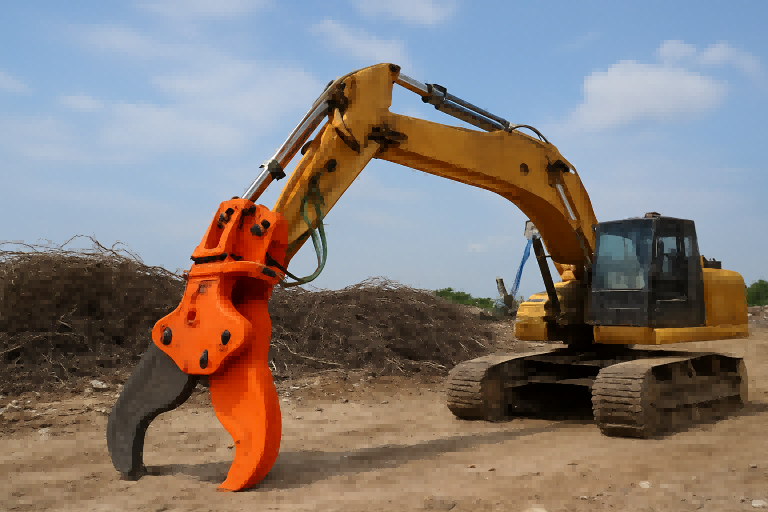
A hydraulic shear for excavators is a robust, high-force cutting tool powered by the excavator’s hydraulic system. It is designed to cut, crush, or shear through metal, concrete, and composite materials typically found in demolition and recycling jobs.
Key features of hydraulic shears include:
- Hard steel bladesfor efficient cutting
- Strong hydraulic cylindersto drive force
- Heavy-duty arms or jawsto grip and crush materials
- Optional 360° rotationfor flexible movement and access
- Hydraulic shears are commonly used in:
- Demolitionof buildings, bridges, and structures
- Scrap metal recycling(steel beams, rebar, vehicles)
- Vehicle dismantlingand auto recycling
Whether you are a contractor, recycler, or equipment dealer, having the right shear can shave days off project timelines and improve safety on-site.
Key Factors to Consider When Choosing a Hydraulic Shear
Before you make a purchase, it’s important to understand what factors truly matter. Selecting the right hydraulic shear is not just about cutting power—it’s about matching the tool to your working conditions, machine specs, and long-term operational goals.
1. Compatibility with Excavator Size & Hydraulics
The general rule is your shear must be proportionate to your excavator’s capacity.
You should consider:
- Whether the shear’s operating weight is suitable for your excavator boom andarmstrength
- The flow rate and hydraulic pressure required to run the shear effectively
- Whether a custom mounting bracket or quick coupler is needed
Tip: Overloading your excavator with a shear that’s too heavy can reduce equipment life and increase fuel consumption.
2. Type of Materials You’ll Be Processing
Different jobs demand different kinds of cutting force and blade strength. Think about the primary materials you’ll be working with:
- Scrap metal:Focus on fast cycle times and good blade penetration
- Structural steel :Look for shears with high crushing force and durable blade edges
- Vehicle bodies:Need sharp jaws, quick open/close speed, and resistance to deformation
- Reinforced concrete or bridge demolition:Consider heavier shears and optional rotation for precision cutting
Some shears are general-purpose, while others are optimized for specific use cases. Be clear about your project types so your choice aligns with your needs.
3. Blade Strength and Cutting Efficiency
The blades are the heart of the hydraulic shear. You need to ensure they’re made from wear-resistant materials, such as high alloy tool steel, that can withstand repeated high-pressure cutting.
Look for:
- Replaceable or reversible bladesto reduce downtime
- Precision-machined edgesfor consistent cutting
The goal is to maximize cutting efficiency while minimizing blade replacement costs.
Note: Cheaper shears may come with soft or untempered blades that wear quickly or become misaligned under pressure.
4. Rotation vs. Fixed Models
Hydraulic shears come in two main configurations:
- Fixed shears:Simpler design, lower cost, often lighter. Suited for straightforward horizontal cutting jobs.
- Rotating shears (360°):Offer full movement flexibility, ideal for working in confined or multi-directional environments.
If your jobs often involve working in tight areas or require frequent repositioning of the shear, rotating models can greatly improve efficiency, even if they cost more initially.
However, if your operation is repetitive and space is not an issue, fixed shears can be more cost-effective and easier to maintain.
5. Durability, Maintenance, and Spare Parts
Longevity and ease of service are often overlooked—but they can have a major impact on your bottom line.
Ask yourself:
- Are the cylinders, hoses, and sealsbuilt to handle high pressure?
- Are wear components(e.g., blades, bushings) easy to access and replace?
- Does the manufacturer provide spare parts, service manuals, or after-sales support?
Regular maintenance is key to keeping your shear in good condition.
Real-World Applications of Hydraulic Shears
Let’s look at some real-world use cases where hydraulic shears dramatically improve productivity:
Vehicle Recycling
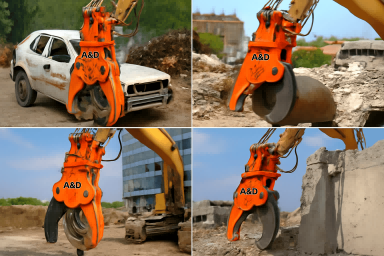
Scrap yards and recycling facilities use hydraulic shears to slice through car bodies, chassis, axles, and even engine blocks. Compared to manual torch cutting, shears are faster, safer, and more environmentally friendly.
Industrial Dismantling
Old refineries, factories, and warehouses contain a mix of piping, tanks, and steel frames. With a rotating shear, operators can precisely cut complex structures—minimizing disruption and waste.
Urban Construction & Demolition
When space is tight, rotating hydraulic shears help contractors safely remove steel components floor by floor—without damaging surrounding infrastructure.
Why A&D Hydraulic Shears Are Trusted by Contractors Worldwide
At A&D, we may not be a high-tech innovator, but we are a reliable and experienced manufacturer of excavator attachments. Based in China, we specialize in hydraulic shears for demolition and recycling, offering durable, practical, and affordable solutions to clients in over 20 countries.

Here’s what sets us apart:
 Factory-Direct Manufacturing
We design, weld, assemble, and test every shear in-house. This gives us full control over quality and ensures you’re dealing directly with the source—not an agent or reseller.
Competitive Pricing
Thanks to our streamlined production and local material sourcing, we offer excellent value without compromising quality. Buyers often report 30–50% savings compared to imported brands.
Wide Excavator Compatibility
Our hydraulic shears are available in multiple sizes and configurations, and we can customize mounting interfaces to fit excavators of various brands and models
Experienced Export Team
With years of in international trade, our staff understands shipping, customs, and documentation requirements. We support clients across Southeast Asia, the Middle East, South America, and Eastern Europe.
Reliable After-Sales Support
We provide:
User manuals
Installation guides
Technical Q&A
Our goal is to make your experience as smooth as possible—from inquiry to after-sales service.
Conclusion: Invest in the Right Shear, Gain Long-Term Benefits
The right hydraulic shear can transform your excavator into a demolition powerhouse—helping you save time, cut costs, and improve safety on every job.
Whether you are a demolition contractor, recycler, or equipment dealer, the key is to work with a manufacturer that understands your needs and delivers consistent value.
At A&D, we are proud to offer practical, proven, and affordable hydraulic shears for excavators of all sizes. With reliable quality, export experience, and personalized service, we’re ready to be your trusted supplier.
Contact us today to get a free consultation or quote.
Let’s build smarter job sites—one shear at a time.