
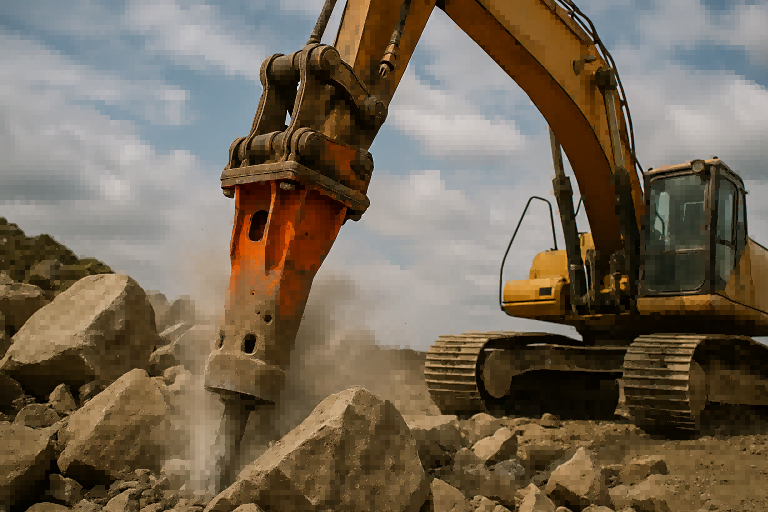
Is your hydraulic breaker losing power? Is your jobsite filled with strange noises, weak impact, or hydraulic oil leaks? Ignoring these warning signs isn’t just frustrating — it leads to reduced productivity, skyrocketing repair costs, and project delays that damage your bottom line.
A faulty hydraulic breaker can bring your excavation, demolition, or quarrying operations to a standstill. This comprehensive guide dives deep into the world of hydraulic hammer repair. Whether you’re a contractor, equipment owner, or procurement manager, knowing how to maintain and repair hydraulic hammers can save you significant time and money.
1. Understanding the Core Components of a Hydraulic Hammer
A hydraulic hammer (also known as a hydraulic breaker) is an impact device mounted on an excavator, used to break through concrete structures or rocks. It operates by converting hydraulic pressure into mechanical impact energy through a piston, which strikes a tool (such as a chisel or blunt head) to deliver high-powered blows.
Key Components & Functions:
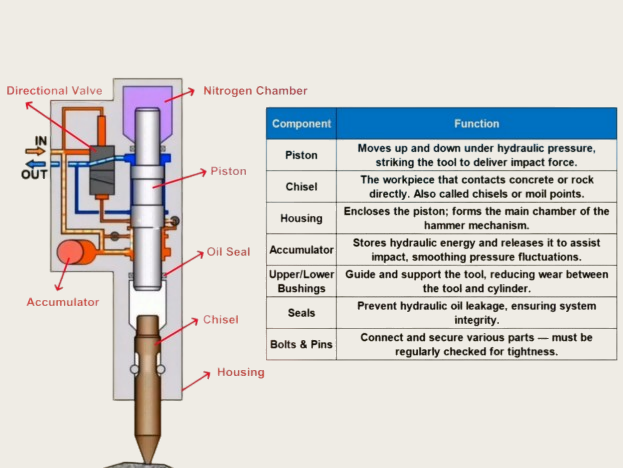
Knowing these components allows for better fault diagnosis and more effective communication with service technicians.
2. Signs Your Hydraulic Breaker Needs Maintenance
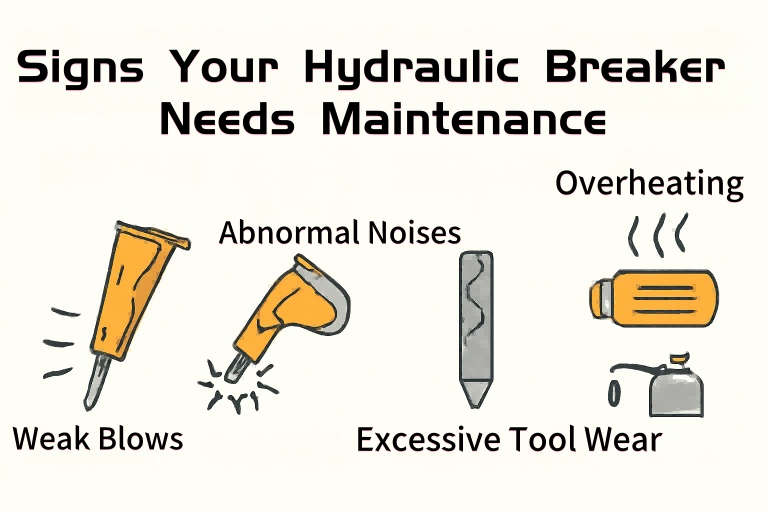
Identifying early signs of trouble can prevent costly downtime. Watch for the following issues:
2.1 Loss of Power / Reduced Impact Force
Possible Causes: Worn piston, internal leakage, insufficient hydraulic pressure
Symptoms: Weak blows, reduced breaking efficiency
2.2 Abnormal Noises and Vibrations
Possible Causes: Loose bushings, piston-to-metal contact, stuck internal parts
Symptoms: Metal clanking, erratic operation, irregular impact frequency
2.3 Excessive Tool Wear
Possible Causes: Poor lubrication, worn guide bushings, misaligned installation
Symptoms: Tool breakage, jamming, visible deformation, shortened lifespan
2.4 Overheating
Possible Causes: Prolonged heavy-duty operation, hydraulic flow or pressure issues
Symptoms: High surface temperature, foaming hydraulic oil, declining impact force
3. Why Timely Repairs Give You a Competitive Advantage
3.1 Reduce Unplanned Downtime
Unexpected breakdowns often occur during peak construction periods. By performing regular maintenance, you can detect and solve potential problems before they evolve into full equipment shutdowns.
3.2 Restore and Maintain Impact Efficiency
Reduced performance usually stems from worn components or hydraulic issues. Professional servicing restores critical parts like pistons and seals, allowing the breaker to operate at its rated impact frequency and energy level.
3.3 Extend Equipment Lifespan
By replacing worn components, adjusting assembly gaps, and optimizing lubrication, servicing significantly delays fatigue in critical parts — extending overall machine life and lowering capital replacement costs.
3.4 Ensure Safety Compliance
Hydraulic leaks, high-pressure anomalies, or structural looseness pose serious safety risks. Periodic inspection by professionals ensures the hammer complies with safety regulations and minimizes operator hazards.
4. When Repairs Aren’t Enough: Signs You Need Overhaul or Replacement
Not every problem can be fixed with routine maintenance. Consider refurbishment or replacement if you see these signs:
- Severe internal scoring or wear
- Persistent hydraulic failures after multiple repairs
- Cracks in the cylinder or piston
- Consistently poor performance despite maintenance
5. Why Manufacturer Repairs Are More Reliable
As the original manufacturer of hydraulic hammers, we do more than build equipment — we understand every detail, function, and tolerance of every part.
What You Gain by Choosing Us:
Accurate Diagnostics and Efficient Repair
Our intimate knowledge of the components and engineering specs ensures that we find and fix problems faster and more effectively.
 100% Genuine OEM Parts
We provide original replacement parts that match your equipment exactly — eliminating the risks associated with low-quality aftermarket alternatives.
Skilled Technical Team & High Standards
Our technicians are factory-trained and adhere to strict repair protocols, ensuring quality results every time.
Extended Warranty & Post-Repair Assurance
You’ll receive a detailed service report and long-term after-sales support, giving you confidence that your machine is fully restored to peak performance.
Global Support, Anytime, Anywhere
Whether you’re in Asia, Europe, Africa, or the Americas, our service team is ready to offer remote diagnostics, technical consultation, and fast logistics
6. The Hydraulic Hammer Repair Process: Step-by-Step
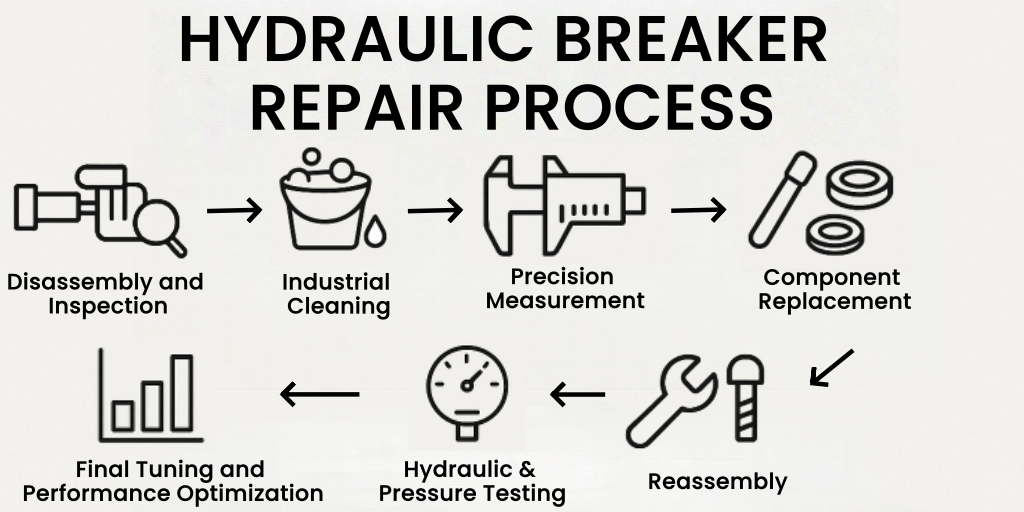
6.1 Disassembly and Inspection
Carefully disconnect the hydraulic lines and dismantle the breaker. Key areas to inspect include the piston, cylinder, accumulator, bushings, seals, and tool.
6.2 Industrial Cleaning
All parts are cleaned using professional solvents to remove sludge, contaminants, and built-up grease — a crucial step for successful repair.
6.3 Precision Measurement
Using calipers, micrometers, and gauges, each component is measured to determine if it still meets OEM specs. Worn parts are flagged for replacement.
6.4 Component Replacement
All damaged parts (such as seals, bushings, tool heads, and diaphragms) are replaced with original or high-quality substitutes. We never “patch” — we fix it right the first time.
6.5 Reassembly
Parts are assembled following original factory procedures. Bolts are torqued using calibrated tools to avoid loosening or hydraulic pressure loss.
6.6 Hydraulic & Pressure Testing
Fresh hydraulic oil is introduced, and the breaker is tested under load. Technicians check for leaks, pressure fluctuations, and abnormal noise.
6.7 Final Tuning and Performance Optimization
We fine-tune impact frequency and energy output based on equipment model and jobsite requirements — ensuring your breaker is efficient, powerful, and fuel-saving.
7. Preventative Maintenance Tips: Keep Your Breaker Working Like New
Proactive care always beats emergency repair. Here are proven daily and seasonal maintenance strategies:
7.1 Daily Inspection Checklist
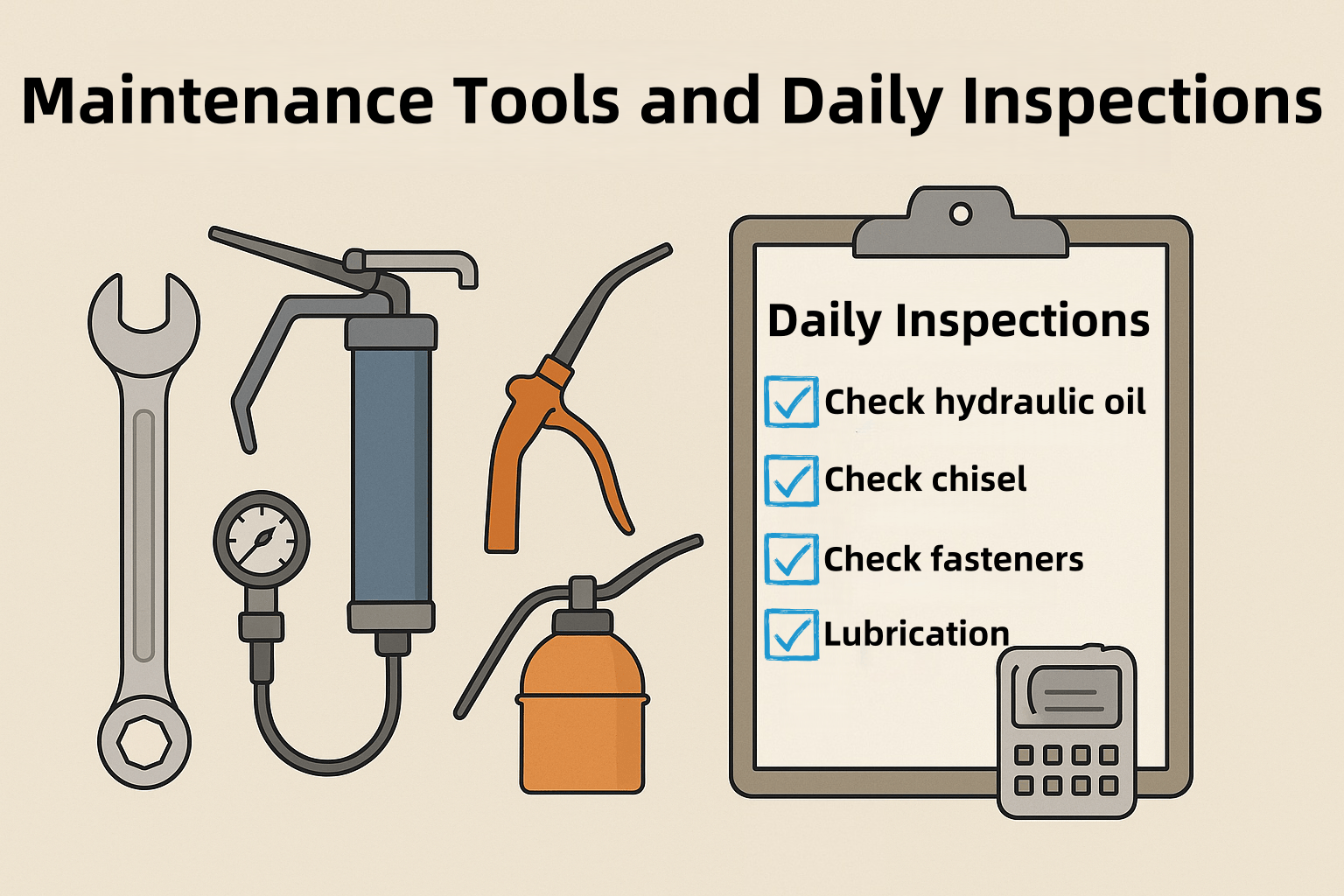
- Check for oil leaks or stains
- Tighten all bolts
and check fasteners - Inspect tool for wear or cracks
- Clean dust and debris from surfac
7.2 Lubrication Best Practices
- Apply special-purpose hydraulic breaker grease every 2–3 hours, especially in dusty environments like quarries or demolition sites.
7.3 Proper Operation Techniques
- Avoid dry firing (never operate without tool installed)
- Always strike perpendicular to the surface — not at an angle
- Don’t run at full power for long continuous periods
7.4 Hydraulic Oil Management
- Regularly replace oil and filters
- Monitor oil condition, level, and cleanliness
- Use oil with correct viscosity, wear resistance, and temperature rating
7.5 Long-Term or Seasonal Shutdown Maintenance
- Drain hydraulic oil before storage
- Apply grease to tool and bushings
- Store in a dry, ventilated place with dust covers or enclosures
8. Final Thoughts: Repair Isn’t Just a Service — It’s a Commitment
We understand what your hydraulic breaker goes through — the high demands, the harsh environments, and the zero-tolerance for downtime.
As a trusted Chinese manufacturer, we offer more than just parts — we deliver factory-level maintenance solutions backed by engineering expertise and global logistics.
Whether you own a single machine or manage an international fleet, our responsive team is ready to keep your equipment running strong.
Contact Us Today
Ready to restore your breaker’s performance? Visit our website now to schedule a consultation or service request — and let your hammer hit like new again.